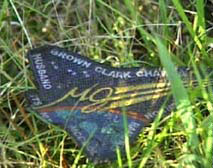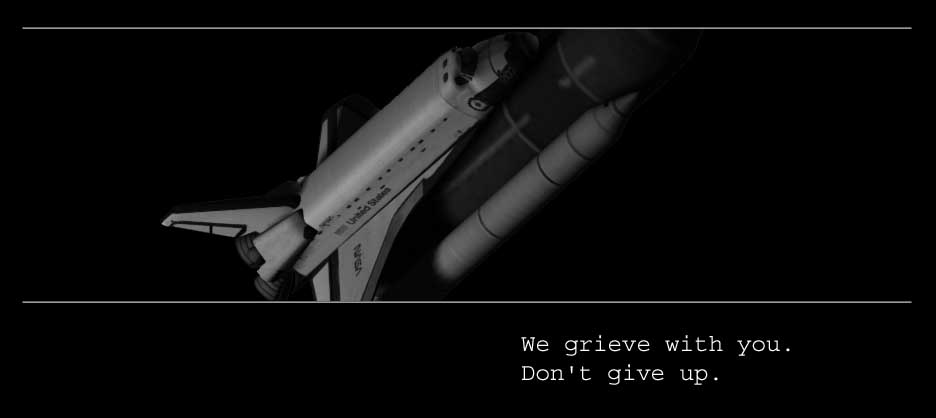
American Astronaut Gus Grissom once said "If we die, we want people to accept it. We're in a risky business, and we hope that if anything happens to us it will not delay the program. The conquest of space is worth the risk of life." He was one of the three men killed in the Apollo 1 disaster on January 27th, 1967, with his fellow astronauts Ed White and Roger Chaffee.
Since that day, there had been only one other disaster during the American space age: the loss of all seven members of the Challenger crew on January 28, 1986, who died while, as Ronald Reagan put it, they "slipped the surly bonds of earth" to "touch the face of God."
You might, perhaps, in the whole scheme of things (especially considering September 11th, 2001) not consider this a "big deal" per se. Even not as important as, say, the loss of American soldiers in a combat situation. But remember that these seventeen people died as explorers, as seekers of knowledge, as the forgers of a brotherhood of the stars; as the architects of Man's journey through the black void through which this tiny speck of dirt circles endlessly. That alone makes them worthy of our rememberance, our admiration, and our respect.